 |
|
|
|
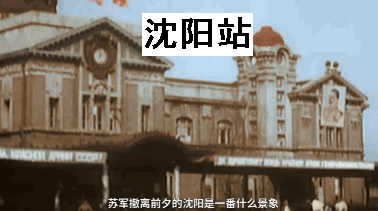
点击下图视频看我爷爷发财的时代背景(1945) Click below image to see video (1945) which my grandfather's historical background of getting rich 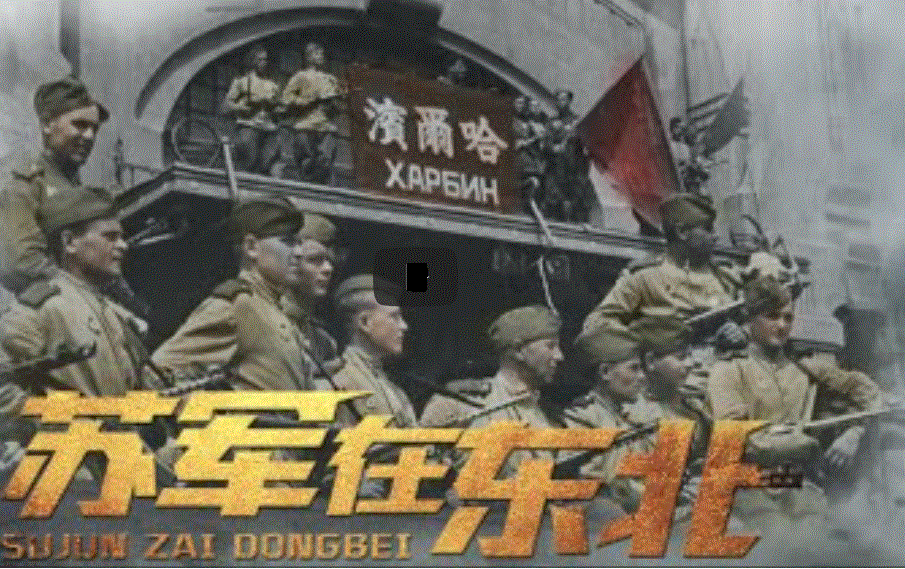 视频来源: Youtube (油管) 左右视频官方频道 日军于1931-1945侵略我爷爷所在的中国东北,之后,150万苏军在 1945年8月击败了 60万日本关东军后,于第二次世界大战结束时占领了我的家乡中国东北,并于1946年 6月撤离,苏军占领期间,掠夺了几乎所有的工业和自然资源,并把资源运回了苏联, 但我爷爷的财产(房产,马匹,马拉的车辆)并没有被抢走,但苏军在欧洲和中国的 军队纪律败坏,经常强奸妇女,我奶奶和姑姑们就经历了这样的危险:我爷爷家的 院子大门没有关好,几个苏军进来了,我奶奶见有苏军进屋里了,知道他们军纪败 坏,赶紧把抽屉和箱子都打开,好东西让他们随便拿,以分散苏军的注意力,这时, 我的两个姑姑趁机走掉,以免被苏军强奸,苏军拿了我家的好东西后就走了,我家 虽然损失了些财物,但却躲过了一劫。以后中国东北有很多金发碧眼的人,就是那 时苏军留下的后代。 From 1931 to 1945, the Japanese army invaded Northeast China, where my grandfather lived. Afterwards, in August 1945, 1.5 million Soviet Union troops defeated 600,000 Japanese Kwantung Army soldiers and occupied my hometown in Northeast China by the end of World War II, withdrawing in June 1946. During the Soviet occupation, they plundered almost all industrial and natural resources and transported them back to the Soviet Union. However, my grandfather's property (house, horses, and horse-drawn carriages) was not looted. But the Soviet troops in Europe and China were undisciplined and frequently raped women. My grandmother and aunts experienced such danger: the gate to my grandfather's yard was not properly closed, and several Soviet soldiers entered. Seeing the Soviet soldiers inside, my grandmother knew they were undisciplined and quickly opened all the drawers and boxes, letting them take whatever they wanted to distract them. At this time, my two aunts took the opportunity to escape to avoid being raped by the Soviet soldiers. After taking our valuables, the Soviet soldiers left. Although my family suffered some financial losses, we escaped a terrible ordeal. Later, many blond-haired, blue-eyed people in Northeast China were descendants of the Soviet soldiers from that time. Part of video text content: Why did the US say that dropping the atomic bomb on Japan was meant to send a message to the Soviets? How did they cope with the harsh Siberian winds? How did they gradually turn Northeast China into a hot potato, ultimately igniting a global anti-Soviet storm? A precious video reveals what Shenyang looked like before the Soviet withdrawal. Let's step into the historical context of the Soviet army in Northeast China. On August 9, 1945, the Soviet Union deployed 1.5 million troops to Northeast China, launching a thunderous offensive against the Japanese Kwantung Army. In many people's minds, this move by the Soviet army was fulfilling a promise. At the Yalta Conference a few months earlier, the Soviet Union promised the US and Britain that it would go to war with Japan three months after defeating Germany. The reality was far more complex. Three days earlier, on August 6, the US dropped the first atomic bomb on Hiroshima, Japan. US Secretary of War Stimson bluntly stated that the atomic bomb was actually meant to send a message to the Soviets. US Secretary of State Bairnas stated that he very much hoped to end the war against Japan before the Soviets intervened. Why did the Americans say such things? At the beginning of that year, the leaders of Beijing, the Soviet Union, and China held a meeting in Yalta, Soviet Union. During a secret meeting between Roosevelt and Stalin, Roosevelt demanded that the Soviet Union take military action against Japan. Stalin's response was to demand that the Soviet army restore the morale of Tsarist Russia and to put forward three specific conditions regarding various interests in China. 美军在日本投下原子弹为何称是咋给苏联人看的 如何面对西伯利亚的苦寒疾风 是怎样一步步把东北搞成了烫手山芋最终引火上身掀起席卷全球的反苏风暴 一段珍贵影像为您解密苏军撤离前期的沈阳是一番什么景象 请和我们一同走进苏军在东北的历史时空 1945年8月9日苏联出动了150万军队进军中国东北对日本关东军发动了雷霆攻势 在许多人的印象中苏军此举是履行承诺 几个月前的雅尔塔会议上苏联答应了美英两国在战胜德国三个月之后对日开战 事实绝非如此简单 此前三天的8月6日美军在日本广岛投入了第一颗原子弹 美陆军部长史汀生直言不讳地说原子弹其实就是炸给苏联人看的 美国国务卿贝尔纳斯则称十分希望在苏联人介入之前结束对日战争 美国人为何要说出这么一番话呢 当年初北京苏三国领导人在苏联的雅尔塔举行会议在罗斯福与斯大林的秘密会议中罗斯福要求苏联对日本动兵 斯大林的答复是是要求苏军恢复沙俄士气在中国的种种利益提出了三个具体的条件 |